Craftsman Snow Blower Instruction Manual: A Comprehensive Guide

This manual provides essential guidance for operating and maintaining your Craftsman snow blower‚ ensuring efficient snow removal and prolonging the lifespan of your equipment․
Understanding Your Craftsman Snow Blower
Before operation‚ familiarize yourself with your Craftsman snow blower’s components․ Locating the model and serial number is crucial for parts ordering and service․ These are typically found on a tag located on the rear of the frame‚ the side of the auger housing‚ or near the engine mounting area․
The model number often begins with three digits followed by a decimal point․ For single-stage models‚ check underneath the handle‚ between the wheels․ Two-stage models share a similar location․ Knowing whether you have a single-stage or two-stage model impacts operation and maintenance․ Craftsman offers a variety of snowblower models; referencing your specific model number ensures accurate information․
Locating the Model and Serial Number
Identifying your Craftsman snow blower’s model and serial number is the first step for maintenance‚ repairs‚ and ordering replacement parts․ Begin your search on the rear of the frame; this is a common location for the identification tag․ Alternatively‚ inspect the side of the auger housing or the area surrounding the engine mount․
For single-stage models‚ look underneath the handle‚ positioned between the two wheels – a gray arrow may indicate the tag’s location․ The model number typically consists of eleven characters‚ beginning with “CM”․ Ensure you record both numbers accurately‚ as they are essential for accessing specific information related to your machine․
Pre-Operation Checks & Safety
Before each use‚ thorough pre-operation checks are crucial for safe and effective snow removal․ Always inspect the snow blower for any loose or damaged parts‚ ensuring all fasteners are tightened․ Verify the auger and impeller are free from obstructions․ Check the fuel and oil levels‚ adding as needed‚ and confirm the chute control operates smoothly․
Safety is paramount․ Never operate the snow blower without proper footwear and eye protection․ Keep children and pets well clear of the operating area․ Be mindful of bystanders and never point the discharge chute towards people or property․ Familiarize yourself with all safety features and warnings detailed in this manual․
Safety Precautions Before Starting
Prior to starting your Craftsman snow blower‚ several safety precautions must be observed․ Ensure the operating area is clear of obstacles like rocks‚ toys‚ and hoses․ Never start the machine indoors or in a poorly ventilated space due to carbon monoxide risk․ Always disconnect the spark plug wire before performing any maintenance or adjustments․
Inspect the shear pins for damage; these are designed to break upon impact with a hard object‚ preventing more serious damage․ Never attempt to override or disable any safety devices․ Wear appropriate clothing‚ including sturdy gloves and eye protection․ Be aware of your surroundings and potential hazards before initiating operation․
Fueling Your Snow Blower
Proper fueling is crucial for safe and efficient operation of your Craftsman snow blower․ Always fuel outdoors or in a well-ventilated area‚ away from open flames or sparks․ Use only fresh‚ clean gasoline with the octane rating recommended in your owner’s manual – typically 87 octane or higher․ Avoid spilling fuel‚ and if a spill occurs‚ wipe it up immediately․
Before refueling‚ always shut off the engine and allow it to cool completely․ Use a funnel to prevent spills and overfilling․ Check the oil level before fueling‚ as low oil can cause engine damage․ Store fuel in an approved container‚ away from heat and direct sunlight․ Never mix oil with gasoline unless specifically instructed by the manufacturer․
Starting & Stopping the Engine
Successfully starting and stopping your Craftsman snow blower requires following a specific procedure․ Before each start‚ ensure the auger is disengaged and the chute is directed safely․ For a cold start‚ prime the engine by pressing the primer bulb several times‚ then engage the choke․ Pull the starter rope firmly and steadily until the engine starts․ Gradually disengage the choke as the engine warms up․
For a warm start‚ the choke may not be necessary․ Simply pull the starter rope․ To stop the engine‚ disengage the auger‚ allow the engine to idle briefly‚ and then move the on/off switch to the “off” position․ Always ensure the engine has completely stopped before leaving the machine unattended․
Cold Start Procedure
Initiating a cold start on your Craftsman snow blower demands a precise sequence․ Begin by verifying the fuel tank is adequately filled with fresh gasoline․ Next‚ firmly press the primer bulb approximately 5-7 times to introduce fuel into the carburetor․ Engage the choke lever‚ positioning it to the “full choke” setting – this enriches the fuel mixture for cold temperatures․

Grip the starter handle securely and pull the recoil starter rope with a smooth‚ deliberate motion․ Expect some resistance initially․ Continue pulling until the engine sputters and attempts to start․ As the engine catches‚ gradually disengage the choke‚ allowing it to warm up․ If it fails to start after several attempts‚ repeat the priming and choking steps․
Warm Start Procedure
Starting a warm Craftsman snow blower engine differs from a cold start․ Typically‚ no priming is required as fuel remains in the carburetor․ Ensure the choke lever is in the “off” or “run” position – avoid using full choke on a warm engine‚ as it can cause flooding․ Firmly grasp the starter handle and pull the recoil rope with a swift‚ steady motion․
The engine should start with minimal resistance․ If it doesn’t ignite immediately‚ briefly try with the choke partially engaged‚ then disengage it again․ Avoid prolonged cranking‚ which can overheat the starter motor․ If persistent starting issues occur‚ consult the troubleshooting section of this manual or a qualified service technician․
Operating Instructions
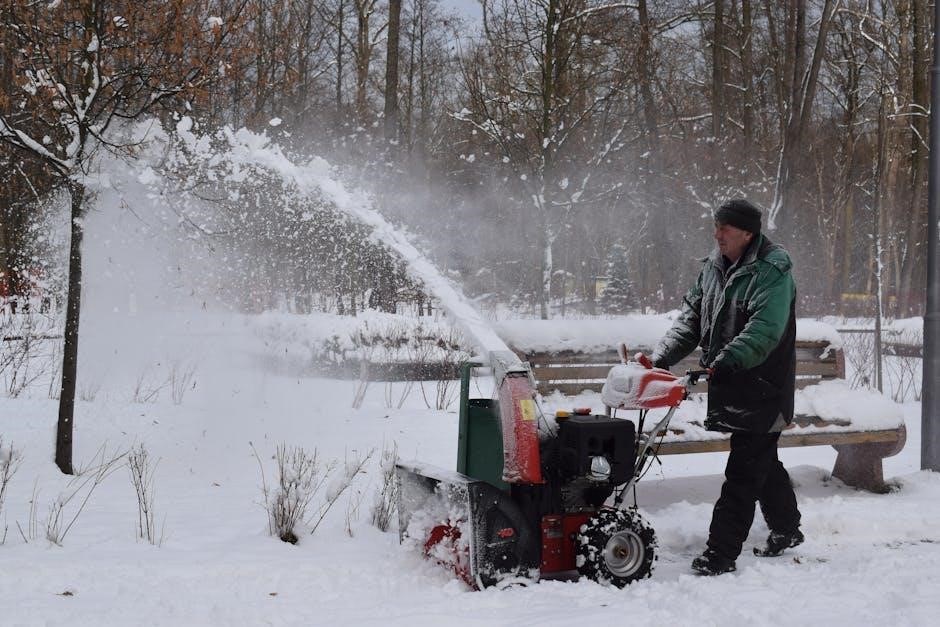
Before operation‚ ensure the area is clear of people‚ pets‚ and objects․ Begin by releasing the parking brake․ Engage the auger by squeezing the handlebar lever․ Slowly move forward‚ allowing the snow blower to self-propel․ Utilize the speed control to adjust to snow conditions and your desired pace․
Steering is achieved by gently guiding the machine․ Overlap each pass slightly to prevent snow buildup․ Regularly check for obstructions and immediately stop the auger if anything is encountered․ Remember to never put your hands near the moving auger or impeller․ Proper operation ensures efficient snow removal and safe usage․

Adjusting the Snow Chute Direction
The snow chute directs the flow of snow‚ allowing you to target specific areas․ To adjust the direction‚ locate the chute control lever – typically positioned on the handlebar․ Gently move the lever left or right to rotate the chute horizontally․ Most models offer a 180-degree rotation range for versatile snow placement․
Some Craftsman snow blowers feature a remote chute control‚ providing convenient adjustment from the operator’s position․ Ensure the chute is securely locked in the desired position before resuming operation․ Avoid forcing the chute‚ as this could damage the mechanism․ Regular adjustments optimize snow removal efficiency and prevent unwanted accumulation․
Adjusting the Throwing Distance
Controlling the snow’s throwing distance is crucial for efficient clearing․ Adjusting this feature typically involves a lever or dial near the snow chute control․ Rotating the dial or moving the lever alters the impeller speed‚ directly impacting the distance snow is thrown․ A higher speed results in greater distance‚ while a lower speed is suitable for closer throws․
Consider snow conditions when adjusting distance․ Wet‚ heavy snow requires a lower speed to prevent clogging‚ whereas light‚ fluffy snow can be thrown further with increased impeller speed․ Experiment to find the optimal setting for your specific conditions․ Always ensure the area is clear of obstructions before maximizing throwing distance․
Maintenance & Troubleshooting
Regular maintenance is vital for reliable performance․ This section details essential upkeep procedures and common troubleshooting steps․ Consistent oil checks and changes‚ spark plug inspections‚ and shear pin replacements are paramount․ Addressing issues promptly prevents further damage and costly repairs․ Always disconnect the spark plug wire before performing any maintenance․
Common problems include clogging and failure to start․ Clogged augers require careful clearing (see Auger and Impeller Inspection)․ Starting issues often stem from stale fuel or a faulty spark plug․ Refer to the Starting & Stopping section for guidance․ If problems persist‚ consult a qualified technician․
Checking and Changing the Oil
Maintaining proper oil levels is crucial for engine longevity․ Check the oil level before each use‚ and change it annually or after every 25 hours of operation․ Warm the engine slightly for easier draining․ Locate the oil drain plug‚ typically on the lower part of the engine‚ and position a suitable container underneath․
Remove the plug and allow the oil to drain completely․ Replace the plug and tighten securely․ Then‚ remove the oil fill cap and add the recommended oil type and quantity (refer to your model’s specifications)․ Avoid overfilling․ Properly dispose of used oil at a designated recycling center․
Spark Plug Maintenance
Regular spark plug maintenance ensures reliable engine starting and optimal performance․ Inspect the spark plug annually‚ or more frequently if experiencing starting difficulties․ Disconnect the spark plug wire before inspection to prevent accidental starting․ Remove the spark plug using a spark plug wrench․

Check the electrode for fouling‚ wear‚ or damage․ Clean the plug with a wire brush if necessary‚ or replace it if significantly worn․ Ensure the gap between the electrodes is correct‚ using a feeler gauge to adjust if needed (refer to your model’s specifications)․ Reinstall the spark plug and securely attach the spark plug wire․
Shear Pins: Replacement and Importance

Shear pins are safety devices designed to protect the auger and impeller from damage․ They are intentionally made to break when the auger encounters a hard object‚ like ice or a rock‚ preventing costly repairs․ Never replace shear pins with bolts or other hardware‚ as this eliminates the safety feature and can cause severe damage․
Always replace broken shear pins with the correct type and size specified for your model․ Keep a supply of replacement pins on hand during the snow season․ To replace‚ disconnect the spark plug wire‚ then remove the shear pin and replace it with a new one․ Ensure proper alignment before re-securing․
Belt Inspection and Replacement
Regularly inspect the drive belt for wear‚ cracks‚ or fraying․ A worn belt can slip‚ reducing the snow blower’s effectiveness and potentially causing damage․ Before inspection or replacement‚ always disconnect the spark plug wire for safety․ Accessing the belt typically requires removing a cover plate․
To replace the belt‚ carefully note its routing around the pulleys․ Loosen the tensioner‚ remove the old belt‚ and install the new one‚ ensuring it’s properly seated in all pulley grooves․ Re-engage the tensioner and verify the belt runs smoothly․ A properly tensioned belt is crucial for optimal performance․
Auger and Impeller Inspection
Periodically inspect the auger and impeller for damage‚ such as bent blades or excessive wear․ Damaged components reduce snow-throwing efficiency and can create safety hazards․ Always disconnect the spark plug wire before any inspection or maintenance․ Look for signs of impact damage from hitting rocks or other debris․
If the auger becomes clogged‚ never use your hands to clear it․ Use a clean-out tool (often provided with the snow blower) to dislodge the obstruction․ Ensure the auger and impeller rotate freely after clearing․ Regularly check shear pins (discussed elsewhere in this manual) as they are designed to protect these components․
Clearing Clogged Auger Housing
A clogged auger housing significantly reduces snow blower performance․ Always disconnect the spark plug wire before attempting to clear any blockage – safety first! Use a wooden or plastic clean-out tool‚ never your hands‚ to remove packed snow and ice․ Insert the tool through the discharge chute or access points designed for clearing obstructions․
Work the tool carefully to break up the clog‚ avoiding forceful movements that could damage the auger blades or impeller․ Once loosened‚ the clog should be easier to remove․ After clearing‚ rotate the auger manually to ensure it spins freely․ Inspect for any remaining debris and repeat the process if necessary․
Storage & Winterization
Proper storage is crucial for maintaining your Craftsman snow blower’s longevity․ Before long-term storage‚ stabilize the fuel system by adding a fuel stabilizer to the gasoline tank; run the engine briefly to circulate the treated fuel․ Drain any remaining fuel from the carburetor to prevent gumming and corrosion․ Disconnect the spark plug wire for added safety․
Clean the snow blower thoroughly‚ removing all snow and ice buildup․ Apply a corrosion protectant to metal surfaces․ Store the unit in a dry‚ sheltered location‚ covered to protect it from dust and the elements․ Consider using a battery tender if your model has an electric start․
Fuel System Stabilization
Stabilizing the fuel system is a vital step in winterizing your Craftsman snow blower․ Gasoline degrades over time‚ leading to carburetor issues and difficult starting․ Add a fuel stabilizer specifically designed for small engines to a nearly full tank of fresh gasoline․ The correct amount will be indicated on the stabilizer’s packaging – follow those instructions carefully․
After adding stabilizer‚ run the engine for several minutes to ensure the treated fuel circulates throughout the entire fuel system‚ including the carburetor․ This distributes the stabilizer and protects all components․ For optimal results‚ drain any remaining fuel from the carburetor bowl to prevent gumming during extended storage․
Long-Term Storage Procedures
Proper long-term storage safeguards your Craftsman snow blower against damage during the off-season․ After fuel stabilization and running the engine‚ disconnect the spark plug wire to prevent accidental starting․ Clean the exterior thoroughly‚ removing any accumulated snow‚ ice‚ or debris․ Inspect all belts and cables for wear‚ and address any issues before storage․
Store the snow blower in a dry‚ sheltered location‚ such as a garage or shed‚ covered to protect it from dust and the elements․ Elevate the unit slightly off the ground to prevent tire flat-spotting․ Periodically check the stored unit‚ and consider applying a corrosion inhibitor to metal parts for added protection․
Understanding Craftsman Snow Blower Models
Craftsman offers a diverse range of snow blowers‚ categorized primarily into single-stage and two-stage models․ Single-stage blowers are ideal for lighter snowfalls and smooth surfaces‚ utilizing an auger to collect and discharge snow in one motion․ They are typically more compact and easier to maneuver․

Two-stage models‚ conversely‚ are designed for heavier snow and varied terrains․ They employ an auger to gather snow‚ then an impeller to throw it further․ These are more powerful and capable of handling deeper drifts․ Identifying your specific model is crucial for accessing the correct parts and maintenance procedures․ Refer to the model number located on the machine․
Identifying Single-Stage vs․ Two-Stage Models
Distinguishing between single-stage and two-stage Craftsman snow blowers is key to understanding their capabilities․ Single-stage models feature a direct auger connection to the wheels‚ propelling the machine forward with the augur’s rotation․ These are generally lighter and best suited for paved driveways with less than 8 inches of snow․
Two-stage snow blowers have separate auger and impeller systems‚ with the impeller throwing the snow further and independently of wheel movement․ This allows for greater control and power‚ making them ideal for gravel driveways and heavier‚ wetter snowfalls․ Look for a separate impeller housing behind the auger to identify a two-stage model․
Common Craftsman Snow Blower Model Numbers
Identifying your specific Craftsman snow blower model number is crucial for accessing the correct parts and service information․ Many models begin with “CM” followed by eleven characters‚ often found on the product identification label located on the rear of the machine‚ between the wheels․
Popular model numbers include those within the 247 series‚ known for their two-stage capabilities․ Other frequently encountered numbers are found in the 315 series‚ representing various single and two-stage options․ Utilizing online parts finders with your model number quickly narrows down compatible replacement parts․ Remember to always double-check the number for accuracy!